 By Christina Katz
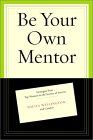
In her latest book, "Be Your Own Mentor," Sheila Wellington offers insight from Catalyst research on how women can have successful careers. Catalyst is a research organization dedicated to advancing women in the workplace. We sat down with Sheila to learn how BlueSuitMoms can find mentors and gain visibility in the workplace.
In "Be Your Own Mentor," you present yourself as a mentor-in-a-book -- how are you in a unique position as the president of Catalyst to offer career advice to executive women?
In addition to my own career, Catalyst has been in existence since 1962. We're a research enterprise, as well as an advisory service. We put women on corporate boards, so it's our business to understand environments where women succeed. We have always addressed organizations, but this book takes what we know about women in organizations and focuses it on what women can do for themselves.
What is the most exciting thing about being an executive woman today, compared to the sixties?
The mid-sixties was a time of restlessness for women. Educated women wanted to enter the workforce and begin to focus on careers, not just jobs. Today 60 percent of all marriages are dual-earner marriages. The whole landscape has changed -- but there's not enough progress in the upper strata across the economic spectrum.
What would you say accounts for that?
When we ask women, "What are the barriers?" What we hear over and over again is that women feel they are excluded, which means they don't have role models and they are not in the informal networks. That's why I say in the book, when women aren't at TGIF with the guys, they're not just missing the grape, they're missing the grapevine.
What prevents women from actively seeking and becoming mentors?
According to Catalyst's data, 11.7 percent of corporate officers are women, so the top is still predominantly male. People tend to mentor people who are like them and who they are comfortable with. A man at the top looks out and sees a young man and says, "He reminds me of myself when I was just starting out." I don't think that it's a conscious exclusion in the overwhelming majority of cases.
Do you think women are generally open to having men as mentors?
Absolutely. You take the advice where you can get it. I've had male mentors. I've mentored males. There are good guys out there. When somebody with a lot of clout at the top is a mentor, a coach and an advocate, it's a career boost. But what you can get from women mentors is being able to talk about how to balance it all. That's a very important aspect that women mentors bring to the table.
So if a woman is looking to rise into a front line position, such as CEO in a company or partner in a firm, how would she go about getting a mentor?
The one thing she's not going to do is to go up to somebody and say, "Will you be my mentor?" because that's not going to work. There's a terrific quote in the book from Carol Barts, who is the CEO of Autodesk, where she says, "I don't know what that means. Does she want me to be her mother?" The first thing I tell women in every career decision is to be strategic. Figure out what your needs are and then look around. See who's out there who meets those needs. Maybe it is someone you've crossed paths with who's given you a bit of advice on the run with whom you feel a natural affinity.
And that's the next point -- don't have as a mentor somebody with whom the chemistry isn't really solid, because it's not going to work, no matter how much clout they've got. Then begin slowly, by asking a question and letting the relationship blossom from there. If the person is giving a speech or is on a panel, make sure you're there.
You also have to think about what your responsibilities are to your mentor. It's not all a one way street. Don't suck up a lot of time. Keep things brief. Be focused. Shine a light on your mentor. Then ask things like, "When I made that presentation at the meeting last Tuesday, was there anything I could have done better? What would you say some of the strengths and weaknesses were?"
We've all heard of the "glass ceiling," but what is a "glass wall" and how can women avoid becoming stuck behind one?
Glass walls are those invisible barriers that keep women from getting experience in a variety of areas that they need for moving up. One of the things Catalyst hears frequently in its studies is that women are slotted into support roles, not profit and loss roles that diversify their experience base. Catalyst's point is not that every woman has to want to be a CEO, but if that's a woman's choice, she ought to be able to go as far and fast as her talent and ambition take her.
Only 12.7 percent of corporate officers are women, and of them, 75 percent are in support roles: pr, hr, government relations -- not the business of the business. The other 88 percent of corporate officers are men and out of them, 50 percent are line officers, while only 25 percent of all women officers are line officers.
So are you saying that women are in the support positions even at the top?
That's what I'm saying. In other words, you find women being the senior vice presidents of human resources, being executive vice presidents of communications. That's swell, if that's what you want to do. But a woman we quote from one of our focus groups who happens to be in one of those roles says I look back on my career and I realize that all my life I've been the victim of well-meant, but negative mentoring.
In "Be Your Own Mentor" you mention that you've taken many risks in your own career. Do women need to become better risk-takers?
If there's one fundamental axiom, it's that fortune favors the brave. Let your boss know that you're interested in promotion. That you'll move in order to get a promotion. That you want an international assignment. Take on a new venture for the company. Dorrit Bern, CEO of Charming Shoppes says get into a turnaround situation. If you hear of a tough job and you have an opportunity, get in there and grab it.
Would you say we all benefit by women advancing to the top positions within their companies?
When there's a big workplace settlement, the press calls me and asks, "Is this good for women?" I say, "Good for women? Yes! It's also good for the men who are their husbands and for the kids who are their children -- everybody benefits."
Any other advice for executive mothers?
It's essential to make every decision with a strategy in mind. This doesn't mean that you should become so rigid that you aren't open to opportunities, but to evaluate every opportunity strategically and see where it takes you. Lulu Wang, CEO of Tupelo Capital Management says make a five-year career plan, put it in your drawer and update it every year.
And don't sweat the small stuff. When I first began to work and my kids were little, my house was not neat. I didn't give many dinner parties. My life focused on two things: graduate school or work and my family. Andrea Jung who's CEO of Avon says if you've got twenty-five things to do today and you can only pick fifteen -- know how to pick the most important fifteen.
The other thing that was really important for me as a working mother was to have a network of women. You've got to have people you can turn to for support or advice when things are going badly, women with whom you can just let it all hang out. I had that.
Recommended Reading:
• Be Your Own Mentor
Also see:
• The mentor advantage -- how a mentor can help your career or business
• Career planning: 10 practical steps for those too busy to plan
• How can a coach help a working mom like me?
Christina Katz is a speaker, author, and writing coach from Wilsonville, Oregon. Christina offers presentations on the topics of making time for yourself and writing and publishing nonfiction articles. She coaches writers, artists, and professionals to compose authentic, compelling communications and offers manuscript and copy evaluations. To subscribe to her free newsletter "Writers on the Rise," email christinakatz@earthlink.net. Christina's next book is "The Art of Making Time for Yourself," based on her article of the same name. For more information, please visit http://www.christinakatz.com.
